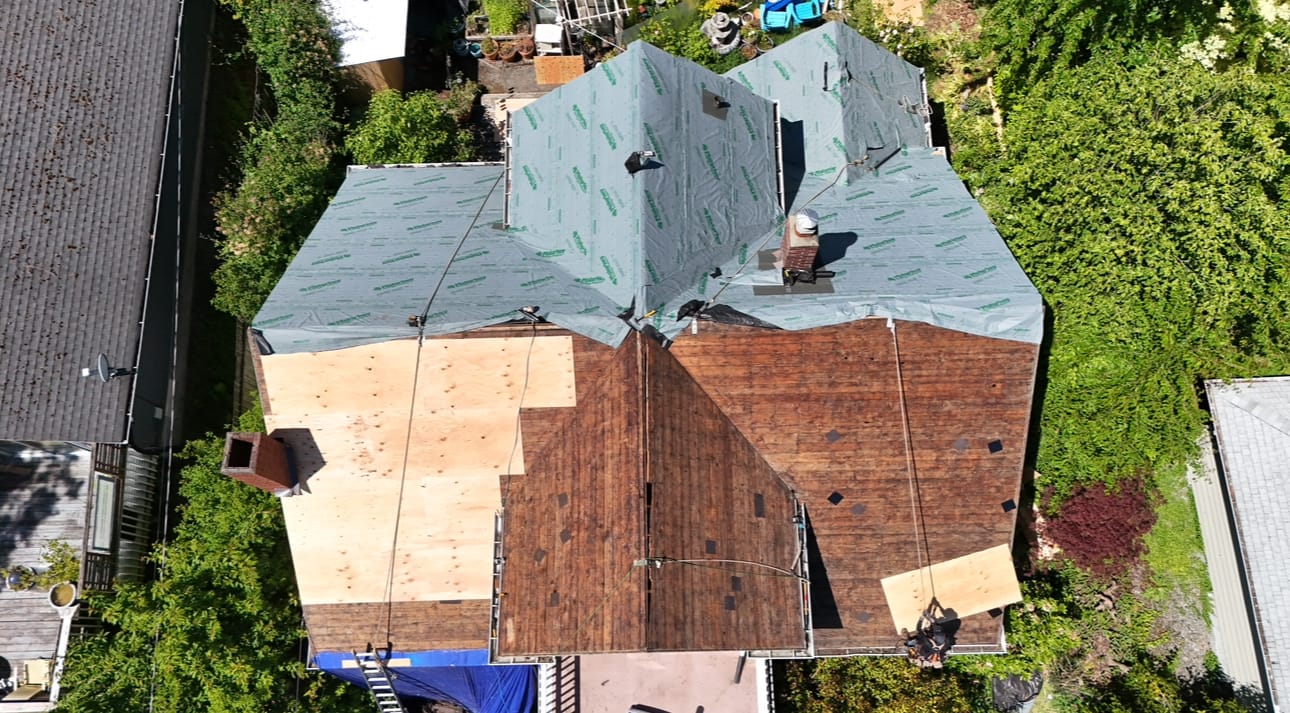
A new roof is one of the largest single investments you will make as a homeowner. In the Seattle area, a full roof replacement typically runs between $12,000 and $35,000 depending on the material and complexity. That is a significant amount of money, and not everyone has it sitting in a savings account. The good news is that several financing options exist to help you get the roof your home needs without emptying your bank account or putting off a necessary replacement until the damage gets worse.
Why Delaying Is Usually More Expensive
Before we get into financing options, it is worth understanding why putting off a roof replacement often costs more in the long run. A failing roof that leaks, even intermittently, can cause damage to insulation, drywall, framing, and personal belongings that far exceeds the cost of the roof itself. Water damage remediation, mold removal, and structural repair can easily add $5,000 to $20,000 or more to your eventual bill. In the Pacific Northwest, where months of steady rain are the norm, even small leaks compound quickly. If your roof needs replacement, acting sooner protects both your home and your budget.
Option 1: Contractor Financing and Payment Plans
Many established roofing contractors, including K Single Corp, offer financing options through partnerships with lending companies. These programs are designed specifically for home improvement projects and typically feature:
- Fixed monthly payments spread over 12 to 144 months
- Competitive interest rates based on credit score and loan term
- Quick approval process. often same-day decisions
- No prepayment penalties. pay off early without extra fees
Contractor financing is convenient because it is handled as part of the roofing project itself. You apply during the estimate process, receive a decision quickly, and the financing is built into your project agreement. Monthly payments are made directly to the financing company, not to the contractor.
This option works well for homeowners who want predictable monthly payments and prefer to keep their home equity and savings intact. Interest rates typically range from 6 to 15 percent depending on credit score and term length, making it comparable to a personal loan but with the convenience of being integrated into the roofing process.
Option 2: Home Equity Loan or HELOC
If you have built up equity in your home, a home equity loan or home equity line of credit (HELOC) can be an attractive way to finance a roof replacement. Seattle-area homeowners have generally benefited from strong home value appreciation, meaning many have substantial equity available.
Home equity loans provide a lump sum with a fixed interest rate and fixed monthly payments. Interest rates are typically lower than personal loans or contractor financing, often between 5 and 9 percent, because the loan is secured by your home. The interest may also be tax-deductible if the funds are used for home improvements (consult your tax advisor for specifics).
HELOCs work more like a credit card secured by your home equity. You have a credit line that you can draw from as needed, and you only pay interest on the amount you actually use. This can be useful if you are planning multiple home improvements beyond just the roof. HELOC rates are variable, which means they can increase over time.
The downside of both options is that they use your home as collateral. If you fail to make payments, your home is at risk. The application process also takes longer than contractor financing, typically two to four weeks for approval and funding.
Option 3: Personal Loan
An unsecured personal loan from a bank, credit union, or online lender is another straightforward option. Personal loans do not require your home as collateral, which some homeowners prefer. Approval is based on your credit score, income, and debt-to-income ratio.
Interest rates for personal loans typically range from 6 to 20 percent depending on creditworthiness, with terms of two to seven years. Credit unions often offer the most competitive personal loan rates in the Seattle area and are worth checking before going with an online lender.
The advantages of personal loans are speed (many fund within days), no home equity requirement, and no risk to your property. The disadvantages are generally higher interest rates than home equity products and potentially lower borrowing limits.
Option 4: Credit Cards
For smaller roofing projects, a repair rather than a full replacement, or a very small roof, a credit card with a 0% introductory APR offer can be a viable short-term financing tool. Some cards offer 15 to 21 months of interest-free financing on new purchases.
However, this strategy only works if you can pay off the balance before the promotional period ends. Once the regular APR kicks in, often 18 to 25 percent, credit card financing becomes the most expensive option by a wide margin. We generally do not recommend credit card financing for full roof replacements due to the high balances involved and the risk of carrying high-interest debt.
Option 5: Insurance Coverage
If your roof damage was caused by a covered peril, such as a windstorm, hail, or fallen tree, your homeowner’s insurance may cover part or all of the replacement cost. Insurance typically does not cover roofs that have simply aged out or deteriorated from normal wear and tear, but storm damage claims are common in the Pacific Northwest.
If you believe your roof damage is storm-related, read our guide on how to file a roof insurance claim after storm damage for step-by-step guidance on the claims process. Filing a claim before getting estimates is important, as your insurance company will want to inspect the damage and may have requirements about the scope of work.
Option 6: Government Programs and Incentives
Washington State and some local jurisdictions offer programs that can help with roofing costs in specific circumstances:
- Weatherization assistance programs through the Washington State Department of Commerce help income-qualifying homeowners with energy-related home improvements, which can sometimes include roofing.
- FHA Title I loans are government-insured home improvement loans available through approved lenders. They offer competitive terms and do not require home equity.
- Energy-efficient roofing incentives may be available for certain high-reflectivity or energy-efficient roofing materials. While federal tax credits have primarily focused on solar, some local utility programs offer rebates for energy-efficient building envelope improvements.
Eligibility and availability of these programs change regularly. Check with the Washington State Department of Commerce and your local utility provider for the most current offerings.
How to Choose the Right Financing Option
The best financing option depends on your specific financial situation. Here is a simplified decision framework:
- You have strong home equity and want the lowest rate: Home equity loan or HELOC
- You want convenience and a fast approval process: Contractor financing
- You prefer not to use your home as collateral: Personal loan
- Your roof damage is storm-related: File an insurance claim first
- You qualify for income-based assistance: Explore government programs
Regardless of which financing path you choose, we recommend getting your roofing estimate first so you know the exact amount you need to finance. At K Single Corp, we provide detailed written estimates that you can use when applying for any type of financing.
We Make It Easy
At K Single Corp, we understand that a roof replacement is a major financial decision. That is why we offer financing options through our lending partners and work with every homeowner to find a payment approach that fits their budget. We also provide transparent, itemized estimates so you know exactly what you are investing in, no hidden fees, no surprise upcharges.
Contact us at (206) 659-4349 to schedule your free estimate and discuss financing options that work for your situation.