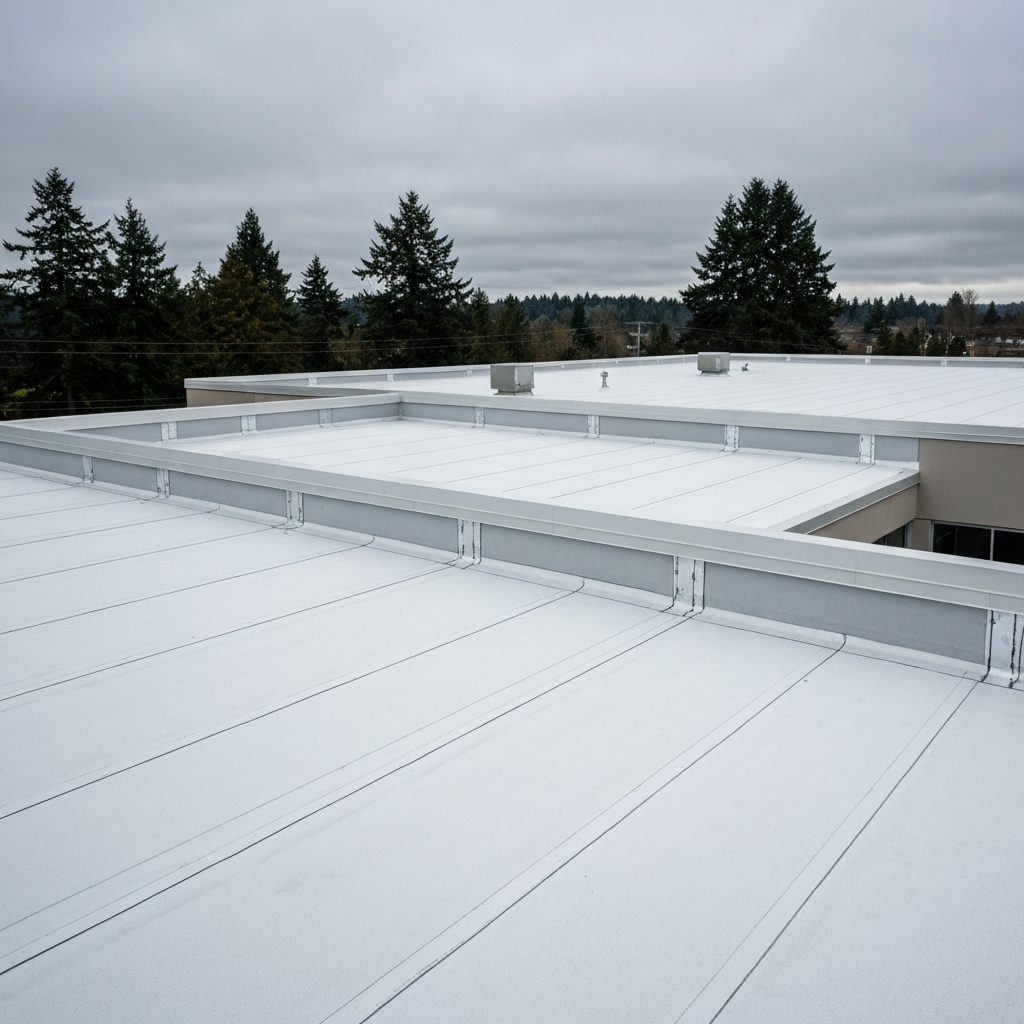
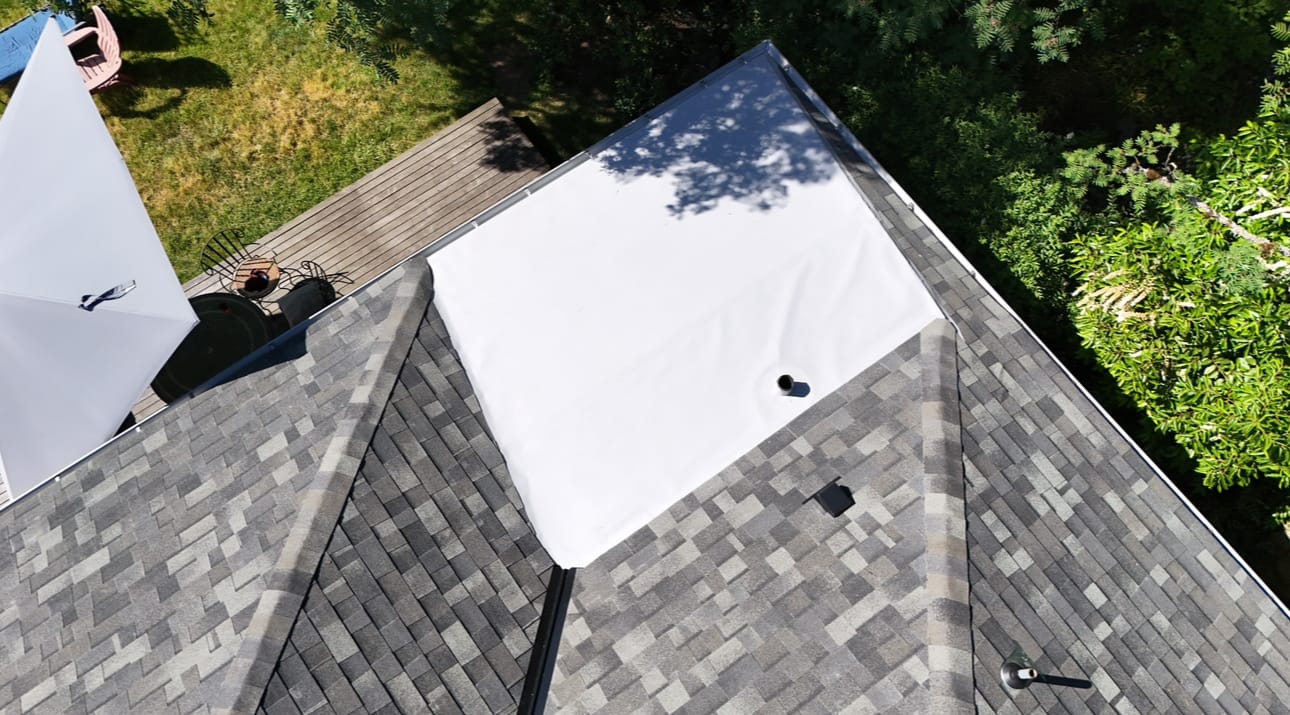
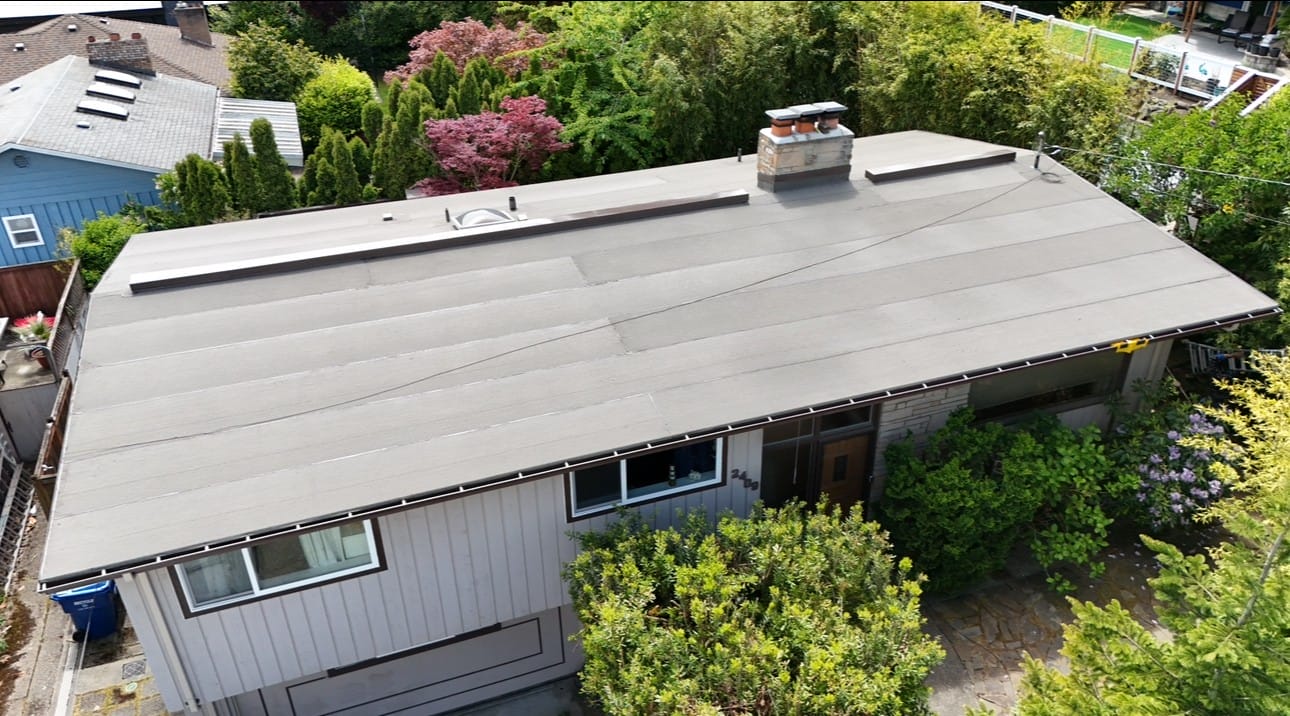
Flat roofing, more accurately called low-slope roofing, is the dominant roofing system for commercial buildings, multi-family properties, and an increasing number of modern residential designs across the Seattle metropolitan area. While steep-slope materials like shingles and metal rely on gravity and overlap to shed water, flat roofing systems use continuous, fully adhered or mechanically attached membranes that create a seamless waterproof barrier across the entire roof surface.
K Single Corp has been installing and servicing flat roofing systems for commercial and residential clients throughout King, Snohomish, and Pierce County since 2007. We work with all three major flat roofing membrane types and help each client select the system that best fits their building, budget, and long-term maintenance expectations.
The Three Major Flat Roofing Membranes
The flat roofing market is dominated by three membrane types, each with distinct characteristics and ideal applications.
TPO (Thermoplastic Polyolefin) has become the most widely installed flat roofing membrane in the Pacific Northwest and nationally. TPO membranes are heat-welded at the seams using hot-air welding equipment, creating a continuous, monolithic waterproof surface with no adhesives or sealants at the joints. This is a critical advantage in Seattle’s climate because welded seams are far more reliable than glued or taped seams in prolonged wet conditions. TPO is available in white, gray, and tan, with white being the most popular due to its energy-reflecting properties. Most TPO installations carry 15 to 25 year manufacturer warranties depending on membrane thickness and installation method.
PVC (Polyvinyl Chloride) is the premium single-ply membrane option. Like TPO, PVC uses heat-welded seams, but PVC has been in use for over 50 years and has the longest track record of any single-ply membrane. PVC’s standout characteristic is its resistance to chemicals, grease, and oils, making it the required choice for restaurants, commercial kitchens, and any building where rooftop exhaust contains grease or chemical vapors. PVC membranes are inherently fire-resistant and maintain their flexibility even in cold temperatures, which is valuable during PNW winter installations. The tradeoff is cost, PVC typically runs 20 to 30 percent more than equivalent TPO systems.
EPDM (Ethylene Propylene Diene Monomer) is a synthetic rubber membrane that has been a commercial roofing staple for over 60 years. EPDM is installed in large sheets that are either fully adhered to the roof deck with adhesive or mechanically fastened with plates and screws. Seams are bonded using specialized tape or liquid adhesive rather than heat welding. EPDM is the most affordable flat roofing option and performs well in a wide range of climates. Its primary limitation in the Seattle market is that adhesive-bonded seams are generally less reliable long-term than heat-welded seams in our consistently wet environment. For simple roof areas without heavy foot traffic or chemical exposure, EPDM remains a practical and budget-friendly option.
Flat Roofing in Seattle’s Commercial Market
The Seattle commercial real estate market relies heavily on flat roofing systems. Office buildings, retail centers, warehouses, restaurants, multi-family apartment buildings, and mixed-use developments throughout the metro area use flat roofing as their primary weather barrier.
Several factors make flat roofing particularly well suited to commercial applications in the Pacific Northwest:
- Rooftop equipment accommodation: HVAC units, exhaust fans, satellite dishes, and other mechanical equipment are easily mounted on flat surfaces with proper curbing and flashing details.
- Cost efficiency at scale: For large roof areas common on commercial buildings, flat membranes cost significantly less per square foot than steep-slope alternatives.
- Inspection accessibility: Building managers and maintenance personnel can safely walk flat roofs to perform inspections and minor repairs, reducing ongoing maintenance costs.
- Solar readiness: Flat roofs provide ideal platforms for solar panel arrays, which are increasingly common on Seattle-area commercial buildings pursuing energy efficiency certifications.
The Critical Importance of Drainage
If there is one factor that determines the long-term success of a flat roof in Western Washington, it is drainage. Seattle receives over 37 inches of rain annually, with the vast majority falling between October and April. A flat roof must move every drop of that water efficiently to prevent ponding, which is the number one cause of premature flat roof failure.
Proper drainage design includes several elements:
Adequate slope is the foundation. While building codes require a minimum slope of one-quarter inch per foot, we often recommend and install steeper slopes where structurally possible. Even small increases in slope dramatically improve drainage speed and reduce the risk of ponding.
Interior drains are the most common primary drainage method for large commercial flat roofs. These drains are set at the lowest points of the roof surface and connect to the building’s internal stormwater piping. Proper drain placement and adequate drain quantity are critical, under-draining a roof is a design error that leads to chronic ponding.
Scuppers are openings through the roof edge or parapet walls that allow water to drain to the exterior of the building. Scuppers serve as primary drainage on some buildings and as overflow protection on others. In either case, they must be sized large enough to handle peak rainfall events without backing up.
Tapered insulation systems use rigid insulation boards cut to gradually increasing thicknesses to create slope on an otherwise flat structural deck. This is one of the most effective ways to eliminate chronic low spots and direct water toward drains on buildings where the structural deck itself is truly flat.
Flat roofs offer an excellent opportunity to upgrade a building’s thermal performance during re-roofing. Rigid insulation boards, typically polyisocyanurate (polyiso), are installed between the structural deck and the membrane, providing continuous insulation without thermal bridging.
In the Seattle climate, where heating dominates energy costs, adding or upgrading roof insulation during a flat roof replacement often pays for itself within five to eight years through reduced heating expenses. Current Washington State energy code requires minimum R-30 roof insulation for most commercial buildings, and we often recommend exceeding this minimum where budget allows.
White TPO and PVC membranes also contribute to energy efficiency by reflecting solar radiation during summer months. While Seattle is not known for extreme heat, summer temperatures routinely reach the 80s and 90s, and a reflective roof surface can reduce cooling loads by 10 to 15 percent compared to dark-colored roofing.
Common Flat Roof Problems in the Pacific Northwest
Understanding the most common flat roof issues in our region helps building owners and managers catch problems early:
Ponding water is the most frequent issue. Regular drain maintenance and periodic professional inspection of roof slope and drain function prevent most ponding problems.
Membrane punctures from dropped tools, dragged equipment, or falling tree branches can compromise the waterproof barrier. Areas around rooftop equipment that receive regular foot traffic should be protected with walk pads or sacrificial membrane layers.
Flashing failures at walls, curbs, pipes, and equipment bases are the second most common leak source after ponding. Flashings are transition points where the flat membrane meets vertical surfaces, and they experience more thermal movement and stress than the field of the roof. Quality flashing details and regular inspection are essential.
Seam separation can occur on EPDM roofs where adhesive-bonded seams lose adhesion over time, particularly in areas subject to ponding water or thermal cycling. This is less of a concern with heat-welded TPO and PVC seams, which is one reason we generally recommend these systems for the Seattle climate.
Our Flat Roofing Installation Standards
Every flat roof installation by K Single Corp follows a rigorous process designed for long-term performance in the Pacific Northwest climate:
- Complete removal of existing membrane and wet or damaged insulation
- Structural deck inspection and repair of any deteriorated areas
- Installation of vapor barrier where required by building conditions
- Installation of rigid polyiso insulation to meet or exceed current energy code
- Tapered insulation at low spots and around drains to optimize drainage
- Mechanically fastened or fully adhered membrane installation per manufacturer specifications
- Heat-welded seams on all TPO and PVC installations (no adhesive or tape seams)
- Fully detailed flashings at all walls, curbs, penetrations, and equipment bases
- Drain and scupper installation or reconnection with proper strainer baskets
- Final inspection with documented photo record and flood testing where applicable
Cost Expectations for Commercial Flat Roofing
For Seattle-area commercial buildings, flat roof replacement costs typically fall in these ranges:
- EPDM (rubber): $5.00 - $7.50 per square foot installed
- TPO (thermoplastic): $6.50 - $9.00 per square foot installed
- PVC (vinyl): $7.50 - $10.00 per square foot installed
For a 5,000 square foot commercial building, this translates to approximately $25,000 to $50,000 depending on membrane type, insulation requirements, and complexity. Larger buildings benefit from economies of scale, while buildings with extensive rooftop equipment, multiple penetrations, or complicated drainage requirements fall toward the higher end.
All K Single Corp commercial flat roof installations include manufacturer-backed warranty registration and a detailed maintenance guide specific to your building. Contact us at (206) 659-4349 to schedule a commercial roof evaluation and receive a detailed proposal for your building.