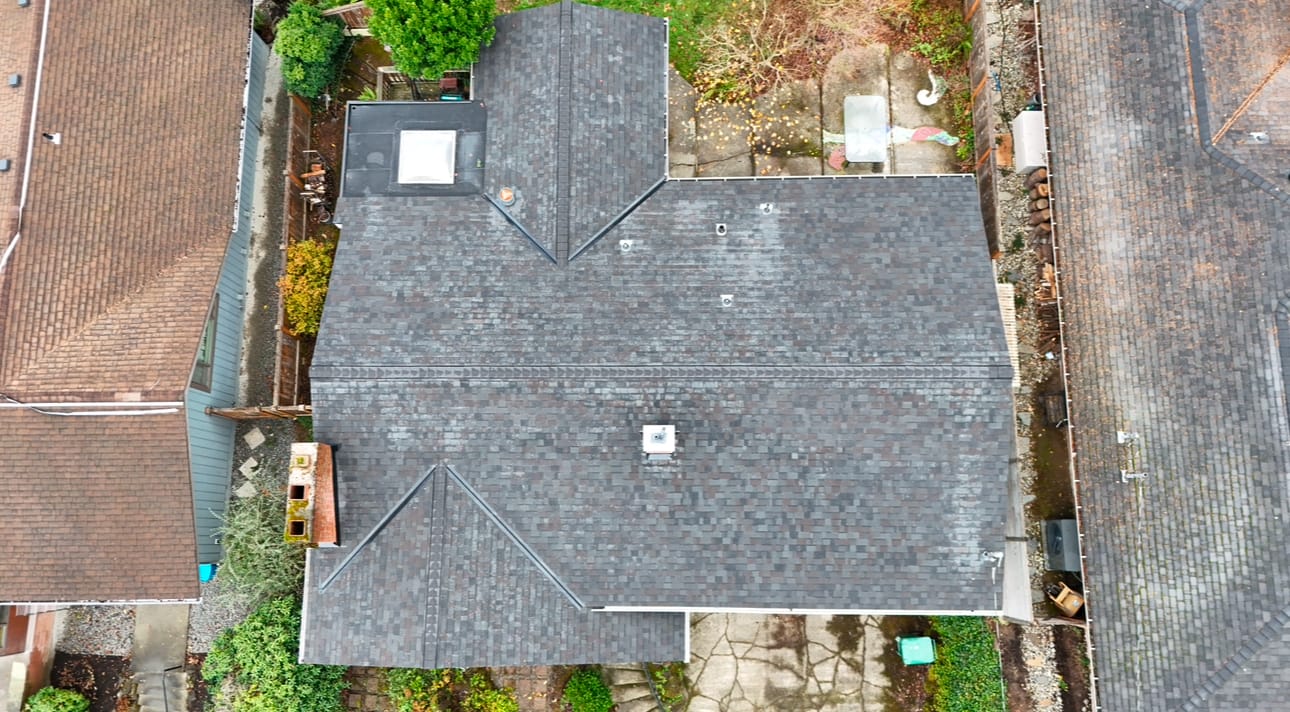
Storm season in the Pacific Northwest runs roughly from October through March, bringing extended rain, atmospheric river events, and periodic windstorms that test every component of your roofing system. The Puget Sound region typically experiences its most severe wind events in November, December, and January, with sustained winds of 40 to 60 mph and gusts exceeding 70 mph during major storms. These events can damage or destroy roofing materials, topple trees onto homes, and overwhelm drainage systems that have not been properly maintained.
Preparing your roof before storm season begins is significantly less expensive and less stressful than dealing with emergency repairs during a storm. Here is what you should do to get your home ready.
Assess Your Roof’s Current Condition
The first step is understanding where your roof stands right now. A roof in good condition with no existing vulnerabilities will handle storms far better than one with pre-existing weaknesses. Before storm season, evaluate:
Age and remaining life. If your roof is approaching the end of its expected lifespan, it is inherently more vulnerable to storm damage. Aging shingles that have lost granules and flexibility are more likely to crack or blow off in high winds. If you have been debating whether to repair or replace, resolving that question before storm season avoids the worst-case scenario of an emergency replacement in the middle of winter.
Visible damage. Walk around your home and inspect the roof surface from the ground using binoculars. Look for cracked, curled, or missing shingles, lifted flashing, and visible deterioration. Any existing damage will worsen during a storm.
Previous repair quality. If your roof has been patched or repaired in the past, check that those repairs are holding. Temporary fixes from previous seasons that have not been properly addressed are common failure points during storms.
If your roof is more than 15 years old or shows visible signs of wear, schedule a professional inspection before October. A qualified roofer can identify vulnerabilities that are not visible from the ground and recommend targeted repairs that dramatically improve your roof’s storm readiness.
Secure Loose and Vulnerable Components
Storms exploit weaknesses. Any component that is already loose, lifted, or deteriorated becomes a failure point under wind pressure and heavy rain. Before storm season:
Repair loose or lifted shingles. Shingles that have lost their adhesive bond to the underlying layer are highly vulnerable to wind damage. Individual shingles can be re-sealed or replaced quickly and inexpensively. Addressing these issues proactively prevents small problems from becoming large ones during a storm.
Inspect and repair flashing. Flashing around chimneys, skylights, vent pipes, and wall-to-roof transitions is the most common source of storm-related leaks. Check that all flashing is firmly attached, properly sealed, and free of cracks or gaps. Flashing repair is one of the most cost-effective pre-storm investments you can make.
Check ridge caps and hip caps. The ridge and hip caps at the peak of your roof are exposed to the highest wind forces. Verify that they are securely fastened and that the sealant beneath them is intact. Loose ridge caps can blow off entirely during a windstorm, exposing the ridge to water intrusion.
Secure satellite dishes, antennas, and other rooftop items. Any object mounted on your roof should be firmly attached and its base flashing in good condition. Loose rooftop equipment can shift or detach during high winds, damaging the roofing material beneath and creating leak points.
Clean and Inspect Your Drainage System
Your gutters and downspouts are the front line of your home’s defense against rain damage. When they fail during a storm, the consequences extend far beyond the roof itself, water backs up under roof edges, saturates fascia and soffits, pools around foundations, and can infiltrate walls.
Clean all gutters thoroughly. Remove leaves, pine needles, and debris that have accumulated during summer. Check that water flows freely through every section without pooling or backing up.
Flush all downspouts. A gutter that drains into a clogged downspout is functionally useless. Run water through each downspout to confirm it flows freely from inlet to outlet.
Verify downspout extensions. Each downspout should discharge water at least three to four feet away from your foundation. Longer extensions, six feet or more, are even better, particularly for homes on slopes or with basement spaces.
Inspect gutter hangers and brackets. Gutters that pull away from the fascia under the weight of water and debris create gaps where water can run behind the gutter and into the wall assembly. Tighten or replace any loose hangers before the heavy rains arrive.
If your property has heavy tree cover, plan on cleaning gutters again in late November after the deciduous trees have finished shedding. One pre-season cleaning is often not enough for homes surrounded by mature trees. For a complete seasonal maintenance approach, see our fall roof maintenance checklist.
Manage Trees and Overhanging Branches
Falling trees and large branches are one of the most damaging storm hazards for PNW homes. The combination of saturated soil (which weakens root systems) and high winds creates conditions for tree failure that the Pacific Northwest experiences more frequently than most regions.
Remove dead or dying trees near your home before they fall on their own terms during a storm. A tree that falls during a controlled removal costs a fraction of the emergency removal plus structural repair bill after it lands on your roof.
Trim overhanging branches that extend over your roof line. Even healthy branches can break under wind and ice loading. Maintaining a six-to-ten-foot clearance between tree limbs and the roof surface reduces the risk of direct impact damage.
Assess leaning or damaged trees on your property and adjacent properties. If a neighbor’s tree appears to be at risk of falling on your home, communicate your concerns, most neighbors are willing to address the issue, and you may have legal options if they do not.
Hiring a certified arborist to assess the trees around your home is a worthwhile pre-storm investment, particularly if you have large trees within striking distance of the structure.
Prepare Emergency Supplies
Even well-maintained roofs can sustain storm damage. Having basic emergency supplies on hand allows you to take immediate mitigation steps:
- Heavy-duty tarps large enough to cover a damaged section of roof (at least one 20x30 foot tarp)
- Sandbags or weighted objects to secure tarps against wind
- Buckets and containers for catching interior leaks
- A battery-powered flashlight and batteries for inspecting damage during power outages
- Your insurance company’s claims phone number stored where you can find it
- Your roofing contractor’s emergency contact number for after-hours service
At K Single Corp, we provide emergency tarp service for storm-damaged roofs across the Greater Seattle Area. Having our number, (206) 659-4349, saved in your phone before you need it can save valuable time when a storm hits.
Know Your Insurance Coverage
Before storm season, review your homeowner’s insurance policy to understand what types of storm damage are covered, what your deductible is, and what the claims process requires. Knowing this information in advance prevents confusion and delays during the stressful aftermath of a storm. For a detailed walkthrough of the claims process, see our guide on how to file a roof insurance claim after storm damage.
Act Before October
The most important piece of advice in this entire guide is timing. Every preparation step listed above is easier, cheaper, and more effective when done before the storms arrive. Roofers, gutter cleaners, and arborists are all less busy in September and early October, which means faster scheduling and often better pricing. Once the first major storm hits, demand for repair services spikes, wait times increase, and emergency work costs more than planned maintenance.
Contact K Single Corp at (206) 659-4349 to schedule a pre-storm roof inspection and get any needed repairs completed before the Pacific Northwest storm season begins.