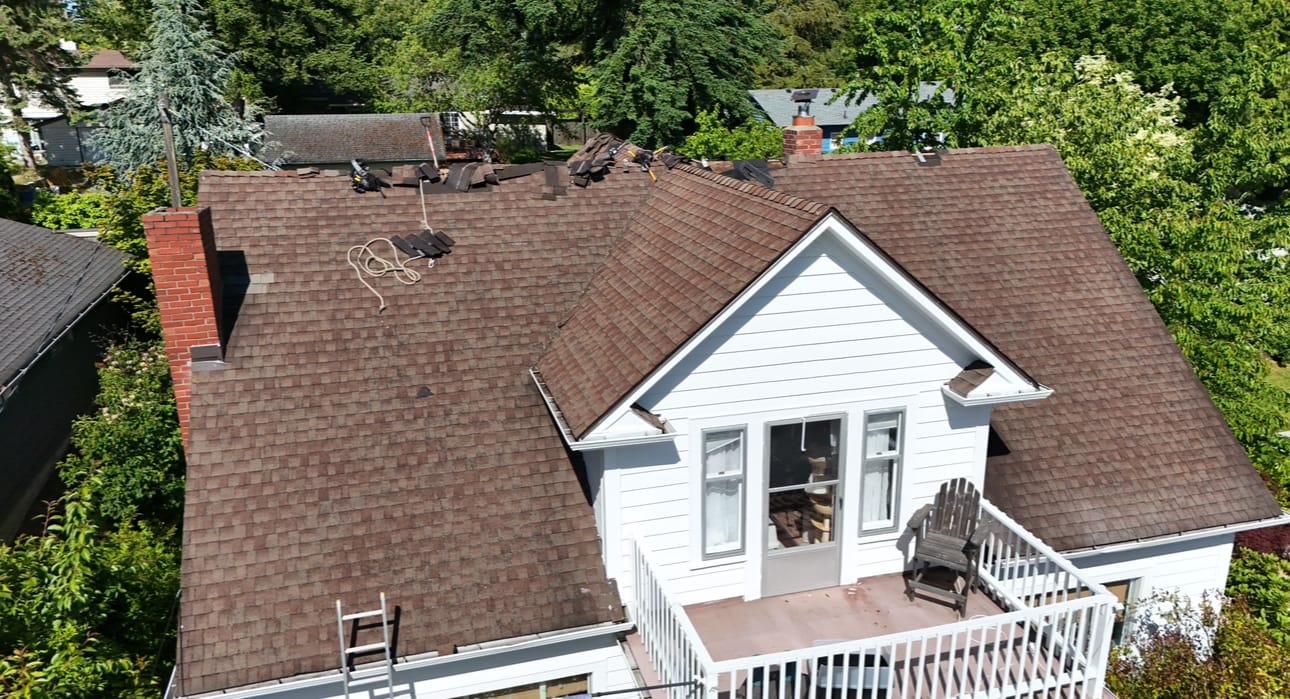
Seattle’s reputation as a rainy city is well earned, but rainfall is only one piece of the climate puzzle that affects your roof. The full picture includes months of persistent moisture, aggressive biological growth, periodic windstorms, temperature fluctuations, and even UV exposure during our increasingly warm summers. Each of these climate factors takes a toll on your roofing system in specific ways, and understanding them helps you make smarter decisions about materials, maintenance, and timing.
The Rain: Persistent, Not Extreme
Seattle actually receives less total rainfall than cities like Miami, New York, or Houston. What makes our rain different is its persistence. Rather than intense downpours followed by sunshine, Seattle gets months of steady, moderate rainfall. October through April delivers rain on the majority of days, keeping roof surfaces consistently damp for extended periods.
This persistent dampness affects roofing materials differently than heavy but intermittent rain. Composition shingles stay damp long enough for moss and algae to establish. Cedar shake stays saturated long enough for the natural decay process to accelerate. Flashing sealants and caulking are perpetually wet, which can soften adhesives and accelerate deterioration. Even metal roofing, while resistant to moisture damage itself, can develop issues at fastener points and transitions if they are not properly sealed.
The practical implication: roofing materials in Seattle age differently than the same materials in drier climates. The manufacturer lifespan printed on a warranty was likely tested under conditions less demanding than what Western Washington delivers year after year. This is why local installation quality and ongoing maintenance matter so much in our market.
Moss, Algae, and Biological Growth
The wet, mild, shaded conditions of the Puget Sound region create a near-perfect environment for biological growth on roof surfaces. Moss is the most visible and damaging, but algae, lichen, and mold also establish on PNW roofs.
Moss is the primary concern because it is the most physically destructive. Moss roots penetrate beneath shingles and shake, lifting roofing materials and creating channels for water infiltration. A thick moss layer also acts as a sponge, holding moisture against the roof surface and keeping it wet long after the rain stops. Over time, this constant moisture exposure degrades both organic and inorganic roofing materials far faster than rainfall alone.
North-facing roof slopes, shaded sections under tree canopy, and areas where debris accumulates are the most vulnerable. Some homeowners find that the north side of their roof deteriorates years faster than the south side, entirely because of differential moss growth driven by shade and moisture retention.
The solution is a multi-layered prevention and treatment approach. Zinc or copper ridge strips inhibit growth on the upper portions of the roof. Regular debris removal eliminates the micro-environments where moss establishes. Professional moss treatment every one to two years addresses growth before it becomes deeply rooted. And choosing moss-resistant materials when it is time to replace, metal, composite, or algae-resistant shingles, reduces the burden going forward. For a comprehensive guide, see our post on how to prevent moss on your roof.
Windstorms: Concentrated and Powerful
The Pacific Northwest does not experience hurricanes or tornadoes, but our windstorms are no joke. The Puget Sound region sits in a corridor where Pacific weather systems funnel through gaps in the Cascade and Olympic mountain ranges, accelerating winds through specific areas. Major windstorms producing gusts of 60 to 90 mph hit the region every few years, with less intense but still damaging events occurring multiple times each storm season.
Wind affects roofing in two primary ways. First, direct wind pressure can lift, crack, or tear roofing materials, particularly shingles that have lost their adhesive bond, ridge caps that are loosely fastened, or flashing that has pulled away from its substrate. Second, wind drives rain horizontally beneath overlapping roofing materials, pushing water into areas that are watertight under normal vertical rainfall. This wind-driven rain infiltration is a common source of leaks that only appear during storms and cannot be replicated during dry-weather testing.
The most vulnerable points on any roof during a windstorm are the edges, ridges, and corners, where wind pressure is highest. These areas need the most robust fastening and sealing details. Buildings on exposed hilltops, waterfront properties, and tall structures experience higher wind loads than sheltered homes in tree-covered neighborhoods.
Proper preparation before storm season, inspecting for loose components, securing flashing, and clearing drainage, significantly reduces the risk of storm damage. Our guide on preparing your roof for PNW storm season covers the essential steps.
Temperature Swings and Thermal Cycling
While Seattle does not experience the extreme temperature swings of continental climates, the range between winter lows (occasionally below freezing) and summer highs (regularly reaching the mid-80s to low 90s, with heat events pushing into triple digits) creates thermal cycling that stresses roofing materials over time.
Every roofing material expands when warm and contracts when cool. This expansion and contraction, repeated thousands of times over the life of a roof, fatigues materials and their fastening systems. Sealants crack, fasteners loosen, and roofing materials develop stress fractures. The effect is gradual and invisible until a failure point is reached, often manifesting as a leak during the first heavy rain after a summer heat event.
Standing seam metal roofing handles thermal cycling particularly well because its clip-based attachment system allows panels to expand and contract without stressing the fasteners. Composition shingles with SBS-modified (rubberized) asphalt formulations maintain flexibility across a wider temperature range than standard asphalt shingles. Cedar shake’s natural flexibility accommodates some movement, though repeated cycling contributes to eventual splitting and curling.
Summer UV Exposure
Seattle’s summers have been trending warmer and drier over recent decades, with extended stretches of clear sky and intense sunshine from July through September. While we still receive far less UV exposure than southern states, the cumulative effect over years matters.
UV radiation degrades the organic compounds in asphalt shingles, causing them to become brittle and lose the flexibility they need to shed water effectively. UV also breaks down the protective granule coating on composition shingles, accelerating the granule loss that is one of the key aging indicators. South-facing and west-facing roof slopes receive the most UV exposure and typically show earlier signs of aging than north-facing slopes on the same roof.
For roofing materials, the UV challenge in Seattle is compounded by the moisture challenge. A shingle that has been UV-degraded during a hot summer and then subjected to months of persistent moisture during the following winter deteriorates faster than either factor alone would predict. The two stresses are synergistic.
What You Can Do
Understanding how Seattle’s climate affects your roof empowers you to take targeted action that extends its life and performance.
Choose climate-appropriate materials. When it is time to replace, select materials with proven performance in the PNW climate. Moss-resistant formulations, rubberized asphalt, and inorganic materials like metal all offer advantages over standard products in our specific conditions. See our guide to the best roofing materials for Seattle’s rain and wind.
Prioritize ventilation. Proper attic ventilation reduces moisture buildup, moderates temperature extremes, and prevents the condensation that rots roof decking from the inside. In the PNW, ventilation is arguably more important than in drier climates because the ambient moisture level is higher year-round.
Maintain proactively, not reactively. The single biggest factor in how long a roof lasts in Seattle is whether the homeowner stays ahead of maintenance or waits until problems are visible. Annual gutter cleaning, biennial moss treatment, periodic flashing inspections, and regular debris removal compound over time into years of additional roof life.
Inspect twice a year. The ideal schedule for Seattle is a fall inspection before the rainy season and a spring inspection after the heaviest weather has passed. Fall catches issues before they are tested by winter storms and rain. Spring identifies any damage sustained during the winter that needs repair before summer UV exposure makes it worse.
Act on problems early. A small flashing gap costs $200 to repair today. Left for two winters, it causes $2,000 in deck damage. Left for five winters, it contributes to a premature roof replacement costing $15,000 or more. The economics of early intervention in the PNW climate are overwhelming.
We Know This Climate
At K Single Corp, every roof we install and every repair we perform is informed by nearly two decades of experience with Seattle’s specific climate challenges. We are based in Burien, WA, and we work exclusively in the Puget Sound region, which means our material recommendations, installation practices, and maintenance advice are calibrated for the conditions your roof actually faces. Contact us at (206) 659-4349 for a free roof assessment and climate-specific maintenance plan for your home.